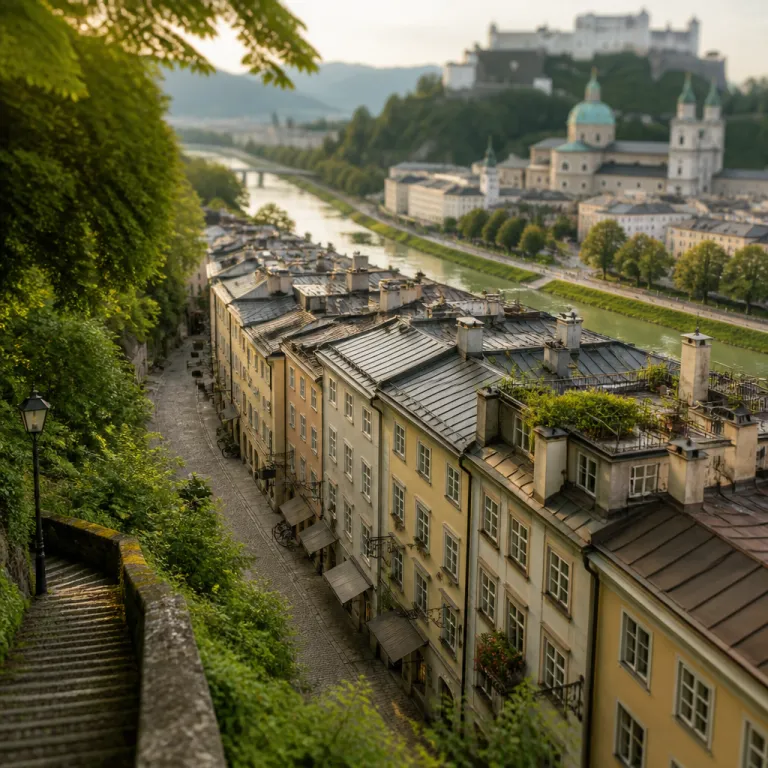
Altstadt left bank: for Salzburg’s most atmospheric city stay
When travelers ask where to stay in Austria for a first refined city break, I often steer them straight to Salzburg’s Altstadt on the left bank. This compact historic center concentrates many of the best hotels in Salzburg, with cobbled lanes, church spires and the fortress rising above in cinematic layers. Here the question is not whether to stay in the city center, but how close you want to be to Mozartplatz, Domplatz and the famous Getreidegasse.
Altstadt is the answer if you want a hotel that lets you step out directly into Salzburg’s cultural life, especially during festival season when performances run from early afternoon to late night. Proximity to the Festspielhäuser and the river means that luxury hotel options command a clear price premium, and the top hotels often impose minimum stay requirements when opera and theatre take over the city. This is the most competitive area for rooms in all of Austria during late July and August, and guests who book a stay early secure both better rates and more characterful accommodations.
Most five star hotels here blend imperial elegance with contemporary design, offering a wellness area with saunas, sometimes a small swimming pool, and a lobby bar where musicians gather after curtain call. At properties such as Hotel Sacher Salzburg or Hotel Goldener Hirsch, nightly rates in high season often start around €450–€550 for doubles, and you are typically a five to eight minute walk from the main Festspielhäuser and about fifteen minutes from Salzburg Hauptbahnhof by taxi or bus. Expect valet parking rather than extensive private parking, because medieval streets were not designed for cars and free private spaces are rare in the Altstadt. If you need guaranteed parking in Salzburg, consider a hotel a five to ten minute walk from the river, where underground garages such as Altstadtgarage A and B and more spacious accommodations become easier to find.
Couples who stay in Altstadt often choose half board, enjoying breakfast and dinner in house before or after performances. The best hotels in this part of Austria understand festival rhythms, serving late suppers and early pre concert menus in the hotel restaurant or bar. For a deeper look at elegant places to stay in Salzburg Austria, including several Altstadt addresses, explore our dedicated guide to refined city accommodations in Salzburg.
Nonntal and Leopoldskron: quiet lanes south of the fortress
Walk ten minutes south from the Altstadt center and the mood shifts, which is why Nonntal and Leopoldskron suit travelers who want Salzburg access without constant crowds. These neighbourhoods sit in a gentle valley beneath the fortress, with leafy streets, residential villas and a slower rhythm that appeals to guests staying three nights or more. Here, choosing where to stay in Salzburg becomes a question of balance between city energy and almost rural calm.
Nonntal offers a handful of small luxury hotel options and intimate guest houses, often in historic townhouses with views back to the cathedral towers. Many properties include on site parking or even free private parking, a rare advantage so close to the city center, and some provide compact wellness areas with saunas for a quiet end to the day. Couples who book a stay here appreciate being a short walk from the river while sleeping in a genuinely local quarter.
Leopoldskron stretches further towards the lakes and alpine pastures south of Salzburg, and it is where staying in Austria begins to feel like a soft transition to the countryside. Several hotels sit beside a small lake, with lawns that invite summer breakfasts outdoors and winter views of snow dusted trees. Schloss Leopoldskron, for example, offers rooms in the historic palace and modern Meierhof, with typical summer rates from about €260–€340 per night and a ten to fifteen minute taxi ride back to the Festspielhäuser. These accommodations are ideal for guests planning day trips to alpine valleys or to the Schladming Dachstein region, yet wanting to return each evening to a cultured city bar and restaurant scene.
In both Nonntal and Leopoldskron, you trade immediate access to Getreidegasse for more space, gardens and often a lower nightly rate. During the peak Austria summer festival period, this can mean the difference between securing a calm luxury hotel and settling for a less inspiring city room. For couples who value quiet nights, these places to stay in Salzburg offer one of the most compelling answers to where to stay in Austria for a romantic, unhurried escape.
Right bank Neustadt and Linzer Gasse: Kapuzinerberg views and local life
Cross Staatsbrücke from the Altstadt and you enter Neustadt, the right bank district anchored by Linzer Gasse and the slopes of Kapuzinerberg. This side of Salzburg has long been where locals actually live, and it now hosts a growing collection of design forward hotels that appeal to guests seeking a less touristy stay. It is also the best base if you want to walk up Kapuzinerberg for sunrise views across the city and the surrounding alpine valley.
Neustadt’s hotels range from polished four star properties to smaller independent addresses, many of them within a five to ten minute walk of the river and the historic center. Several of the top hotels here feature a compact wellness area, sometimes with a small swimming pool, and a relaxed bar that feels more neighbourhood hangout than grand lobby. For couples comparing where to stay in Austria between Salzburg and Vienna, this district offers a similar urban energy to some hotels on Vienna side streets, but on a more intimate scale.
Linzer Gasse itself is a lively pedestrian street lined with cafés, independent shops and restaurants that stay open later than many Altstadt venues. One of the most practical advantages of staying here is easier access to parking, with more hotels offering on site private parking or negotiated rates in nearby garages. Hotels such as IMLAUER Hotel Pitter Salzburg or Hotel am Mirabellplatz often list standard rooms from around €180–€260 in high season, and you can usually walk to the Festspielhäuser in twelve to eighteen minutes while reaching Salzburg Hauptbahnhof in about ten minutes by bus or trolleybus on lines 1, 3 or 5. As one local guidebook puts it without hesitation, “Choose Linzer Gasse for local experience.”
Festival season reshapes this district too, but availability tends to last longer than in the Altstadt, making it a smart choice if you book a stay closer to your travel dates. For a detailed breakdown of how proximity to the Festspielhäuser affects rates and minimum stay rules, our guide to planning your Salzburg Festival sleep strategy explains when it is worth paying for a riverfront luxury hotel and when Neustadt delivers better value. This side of the city is where staying in Austria feels both authentically local and effortlessly connected to the main sights.
Elisabeth-Vorstadt and the station area: convenience over romance
North of the center, around Salzburg Hauptbahnhof in Elisabeth-Vorstadt, the hotel landscape changes again, prioritising practicality over postcard charm. This is the area that answers where to stay in Austria if your priority is train connections, early departures or a one night stop between alpine valleys and Vienna. The streets are broader, the architecture more functional, and the atmosphere less romantic than the Altstadt or Kapuzinerberg slopes.
Many international chain hotels cluster here, offering predictable comfort, efficient service and often generous room sizes compared with the historic center. Guests will find reliable accommodation with strong Wi Fi, good soundproofing and usually straightforward parking, sometimes including free private spaces or at least reasonably priced garages. Several properties sit within a five minute walk of the platforms, which matters if you are arriving late from Schladming Dachstein or leaving early for other cities in Austria.
The trade off is clear: you gain convenience and often lower rates, but you lose the ability to step directly into Salzburg’s bar and restaurant scene. Most guests will take a tram or bus ten minutes into the city center for dinner, or walk twenty minutes along the river if the weather is kind. For couples planning a longer stay Austria wide, this area can work as a practical first or last night base before moving on to lakeside resorts or alpine pastures.
Elisabeth-Vorstadt is improving, with new developments bringing better cafés and more design conscious hotels, yet it still feels like a transport hub rather than a destination. If you are choosing between this district and Neustadt, ask whether the extra ten minute walk to the station is worth sacrificing Kapuzinerberg views and a more atmospheric city stay. For many luxury travelers, the answer is no, unless a tight rail schedule or extensive luggage makes station proximity the decisive factor.
Salzburg-Süd and Anif: space, gardens and resort style comforts
Drive or bus fifteen minutes south from the center and Salzburg-Süd and Anif open up a different answer to where to stay in Austria. These areas appeal to couples who want resort style hotels with gardens, a larger swimming pool and easy access to both the city and the surrounding alpine landscape. Here, accommodations often feel closer to a countryside retreat than an urban base, yet Salzburg’s baroque skyline remains within comfortable reach.
Many hotels in Salzburg-Süd sit along tree lined avenues with views towards the Untersberg massif, offering generous rooms, balconies and extensive wellness areas. Guests can expect saunas, steam rooms, sometimes indoor and outdoor pools, and spa menus that make a rainy Austria summer day feel like an indulgent pause rather than a disappointment. Parking is rarely an issue, with most properties providing ample private parking and often free private spaces directly in front of the hotel.
Anif, slightly further south, is known for its castle, zoo and proximity to lakes and alpine pastures that define the Salzburg countryside. This is an excellent base if you plan to combine a city stay with day trips to nearby lake districts or to winter sports areas once the snow arrives. Couples who book a stay here often split their time between cultural days in Salzburg and excursions to regions such as Schladming Dachstein, returning each evening to a quiet bar and generous breakfast dinner arrangements.
These southern districts are car dependent, so they suit travelers comfortable with driving or using taxis rather than relying solely on public transport. In exchange, you gain space, greenery and a slower pace that can feel restorative after intense festival evenings in the city center. For many repeat visitors, Salzburg-Süd and Anif become their preferred places to stay, precisely because they offer a different rhythm to the more compressed Altstadt and Neustadt hotels.
From Salzburg to the wider alpine valleys: extending your Austrian stay
One of Salzburg’s quiet luxuries is how easily a city break can extend into a wider journey through Austria’s lakes and alpine valleys. Many guests pair a few nights in the Altstadt or Neustadt with time in regions where alpine pastures, winter sports and spa culture define the rhythm of the day. When you plan where to stay in Austria across a week or more, Salzburg becomes both a cultural anchor and a transport hub.
From the city, trains and roads lead quickly to lake districts where summer swimming, sailing and lakeside hotels reshape the mood of your stay. Couples might start with a luxury hotel in Salzburg’s center, then move to a lakeside accommodation with a larger swimming pool, private parking and direct access to hiking trails. This pattern works equally well in Austria summer and in the colder months, when winter sports replace boat trips and the wellness area becomes the heart of the hotel.
For travelers drawn to more dramatic alpine scenery, the Schladming Dachstein region offers a compelling extension, with high altitude valleys, extensive ski slopes and meadows that glow green once the snow melts. Here, hotels Austria wide compete on spa facilities, mountain views and access to alpine pastures rather than proximity to a city bar or opera house. Our detailed review of a castle turned luxury retreat in Mittersill, where Hohe Tauern peaks frame every window, shows how a carefully chosen alpine stay can complement a refined Salzburg city break.
Across these journeys, the question of where to stay in Austria shifts from a single city decision to a sequence of contrasting experiences. A few nights in Salzburg’s Altstadt or under Kapuzinerberg, followed by time beside a lake or in a high valley, creates a narrative that feels both coherent and varied. For couples who value thoughtful pacing, this combination of city, lake and alpine hotel stays is often the most rewarding way to experience Austria in depth.
Key figures and practical statistics for choosing your Salzburg base
- Salzburg welcomes around 1.5 million visitors each year, according to Salzburg Tourismus GmbH (the official Salzburg Tourism Board; 2019 figures), which means early booking is essential for the best hotels during peak festival weeks.
- The historic center is compact enough that most central hotels sit within a ten to fifteen minute walk of Mozartplatz, Domplatz and Getreidegasse, making car free stays entirely practical.
- Public transport links from Salzburg Hauptbahnhof place major alpine and lake regions, including Schladming Dachstein, typically within one and a half to two hours, enabling easy extensions beyond the city.
- Many four and five star properties in Salzburg now feature wellness areas, reflecting Austria wide growth in eco conscious and health focused accommodations over the past decade.
- Altstadt and immediate riverfront locations often command nightly rates that are 20 to 40 percent higher than comparable hotels in Neustadt or Salzburg-Süd during the main festival period.
- For practical orientation, Altstadt and Nonntal lie on the left bank of the Salzach, while Neustadt, Linzer Gasse and Elisabeth-Vorstadt sit on the right bank, with tram and bus lines crossing Staatsbrücke and Makartsteg and several central parking garages (such as those near Mönchsberg and the Altstadtgaragen) serving visitors who arrive by car.
FAQ: where to stay in Salzburg for a refined Austrian city break
What is the best area to stay in Salzburg for first time visitors ?
Altstadt on the left bank is usually the best area for first time visitors who want historic charm and immediate access to major sights. As one local summary puts it clearly, “Altstadt offers historic charm; Linzer Gasse provides local experience.” If you prefer a slightly quieter base with more local life, Neustadt around Linzer Gasse and the Kapuzinerberg slopes is an excellent alternative.
How close should I stay to the Festspielhäuser during festival season ?
If you are attending multiple performances, staying within a short walk of the Festspielhäuser in the Altstadt is worth the higher rates and stricter minimum stay rules. You gain the ability to return to your hotel between performances, change for evening events and enjoy late night drinks in nearby bars without worrying about transport. Travelers on a more moderate budget often choose Neustadt or Nonntal, accepting a ten to fifteen minute walk in exchange for better value.
Is it better to stay near Salzburg station or in the historic center ?
Staying near Salzburg Hauptbahnhof in Elisabeth-Vorstadt is convenient for early trains and one night stopovers, with practical hotels and easier parking. However, the area lacks the atmosphere of the Altstadt and Kapuzinerberg districts, so couples on a leisure trip usually prefer the historic center or Neustadt. If your itinerary includes only one or two rail journeys, prioritise character and walkability over station proximity.
Can I stay outside Salzburg and still enjoy the city easily ?
Yes, areas such as Salzburg-Süd and Anif offer resort style hotels with gardens, pools and wellness areas, while remaining a short drive or bus ride from the center. These districts suit travelers who want more space, private parking and a quieter environment after busy days in the city. They also work well if you plan to combine Salzburg with day trips to lakes, alpine valleys or winter sports regions.
How many nights should I plan for a Salzburg city break ?
For a focused city break with concerts, museums and leisurely walks through the Altstadt and up Kapuzinerberg, three nights is an effective minimum. This allows time for at least one major performance, a half day exploring Getreidegasse and the cathedral quarter, and another day for the right bank and a hill walk. Travelers combining Salzburg with lakes or alpine regions in Austria often extend to five or six nights, splitting their stay between the city center and a nearby countryside hotel.